How to Turn Health Goals Into Daily Actions
A practical framework for turning broad wellness intentions into scheduled activities, progress logs, and daily actions you can complete.
Key takeaways
- Start with a clear outcome, then define the smallest repeatable action that supports it.
- Use scheduled activities to make goals visible in the daily routine.
- Track completion and context, not only the final result.
- Review progress regularly so your plan can adapt before it stalls.
Broad intentions need a daily shape
Most wellness goals start as a broad intention: sleep better, move more, reduce stress, drink more water, or build a steadier fitness routine. The intention matters, but it is not enough on its own. A goal becomes useful when it tells you what to do today.
That is why a health planning system should connect the goal to concrete activities. Instead of treating "improve sleep" as one large task, break it into actions such as setting a wind-down reminder, logging caffeine timing, or protecting a consistent bedtime window.
Convert each goal into activities
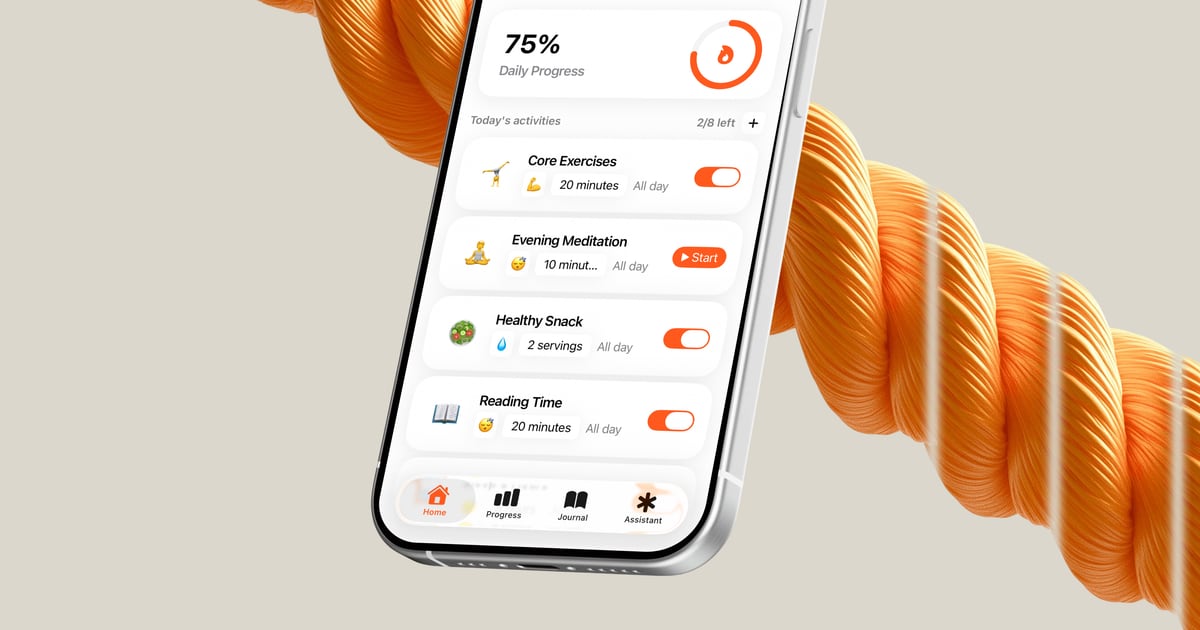
A good activity is specific, repeatable, and measurable enough to complete without debate. It can be a toggle, a count, a timer, or a manual log. The format depends on what the user needs to do.
For example, a hydration goal might use a count activity for glasses of water. A mobility goal might use a timed stretching session. A stress goal might use a short breathing session and a journal reflection. Each activity should make progress easier to start, not harder to understand.
- Toggle activities work for yes-or-no routines like vitamins or a breathing session.
- Count activities work for repeatable units like water, steps, or meditation minutes.
- Timed activities work for workouts, walks, focus blocks, and recovery sessions.
- Progress logs work when the meaningful change is a value, note, or milestone.
Use context to choose what matters today
Daily planning should not feel like a generic checklist. The most useful plan reflects the user's current goals, recent history, journal context, and HealthKit-derived progress. If sleep is slipping, the day can prioritize recovery. If a fitness goal is ahead of pace, the plan can protect consistency without adding unnecessary pressure.
This is where Synk AI is positioned differently from a simple habit tracker. The daily plan is connected to goals, activities, logs, journal memory, and optional AI guidance. The app can help users decide what deserves attention now.
Review the plan before it drifts
A wellness plan should change when the user changes. If an activity keeps getting skipped, the answer may not be more motivation. The activity might be scheduled at the wrong time, sized too large, or disconnected from the goal it is supposed to support.
A regular review makes the system more honest. Look at streaks, missed days, progress pace, and journal notes. Then adjust the plan so the next action is realistic. Sustainable health progress usually comes from small corrections made early.
Build the daily plan behind your wellness goals
Synk AI turns goals, activities, journals, and HealthKit-derived progress into a clear daily action plan.
Explore Synk AI